#Education
-

How failures in education create workforce strain, skills gaps, and long-term institutional costs
When schools fail to prepare students effectively, the consequences do not stop at graduation. They ripple outward into the workforce, increasing training burdens, deepening skills gaps, and placing added strain on businesses, institutions, and communities. This piece examines how weaknesses in the education-to-workforce pipeline create larger systemic costs — and why better alignment across education,…
-

Build the System
Civil rights violations in education are rarely just isolated incidents. More often, they reflect deeper systemic failures — weak oversight, fragmented records, inconsistent enforcement, and institutions that make accountability difficult to trace. This piece explores how ecosystem mapping and digital infrastructure can help make those patterns visible, strengthen compliance, and support more meaningful educational equity.
-
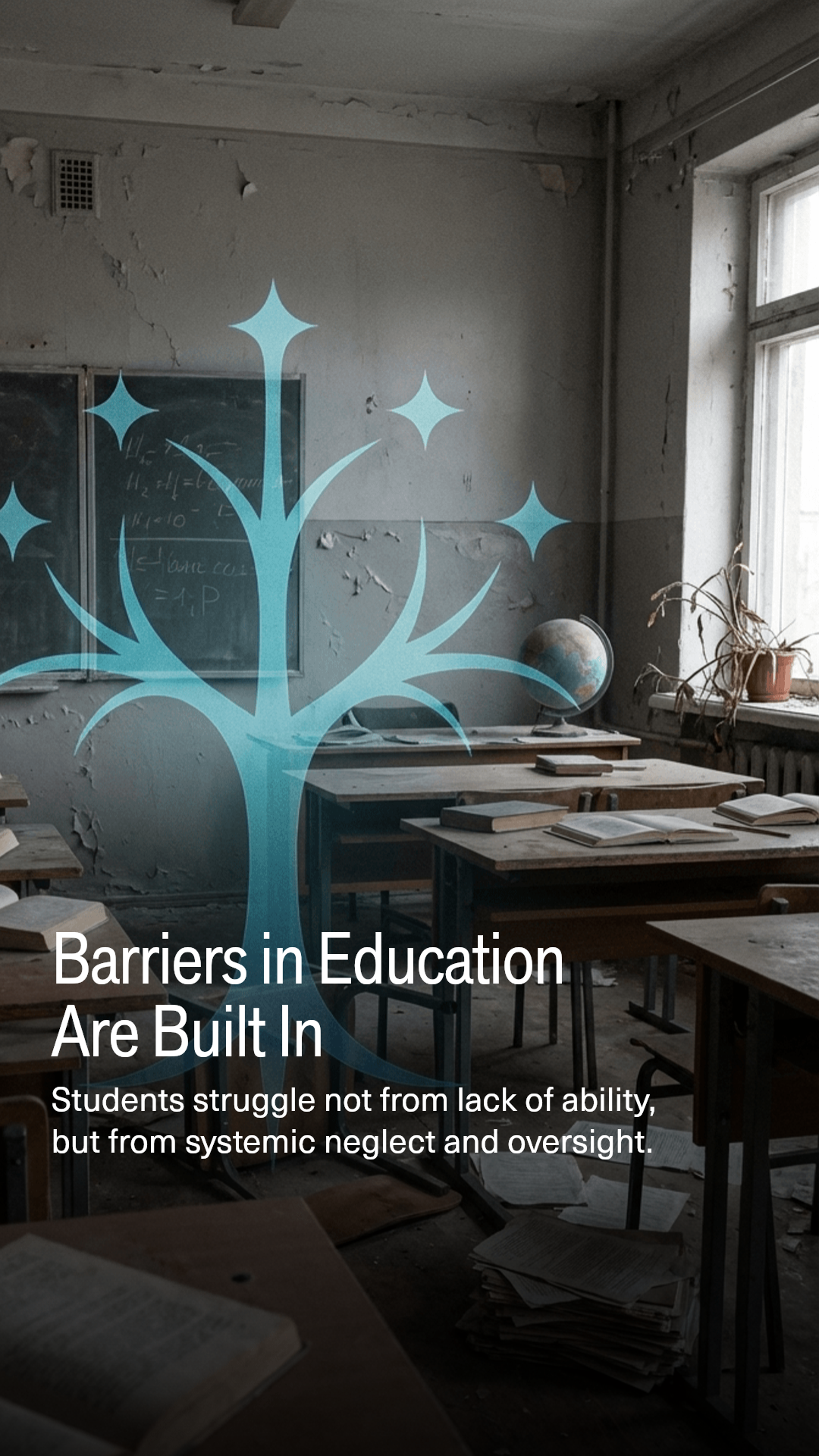
What Educational Harm Really Looks Like
Educational harm is rarely obvious at first. It often emerges through weak oversight, poor system design, fragmented support, and institutional patterns that leave students struggling without meaningful intervention. This piece examines what educational harm actually looks like in practice — and why identifying it early is essential for building healthier, more accountable learning systems.
-
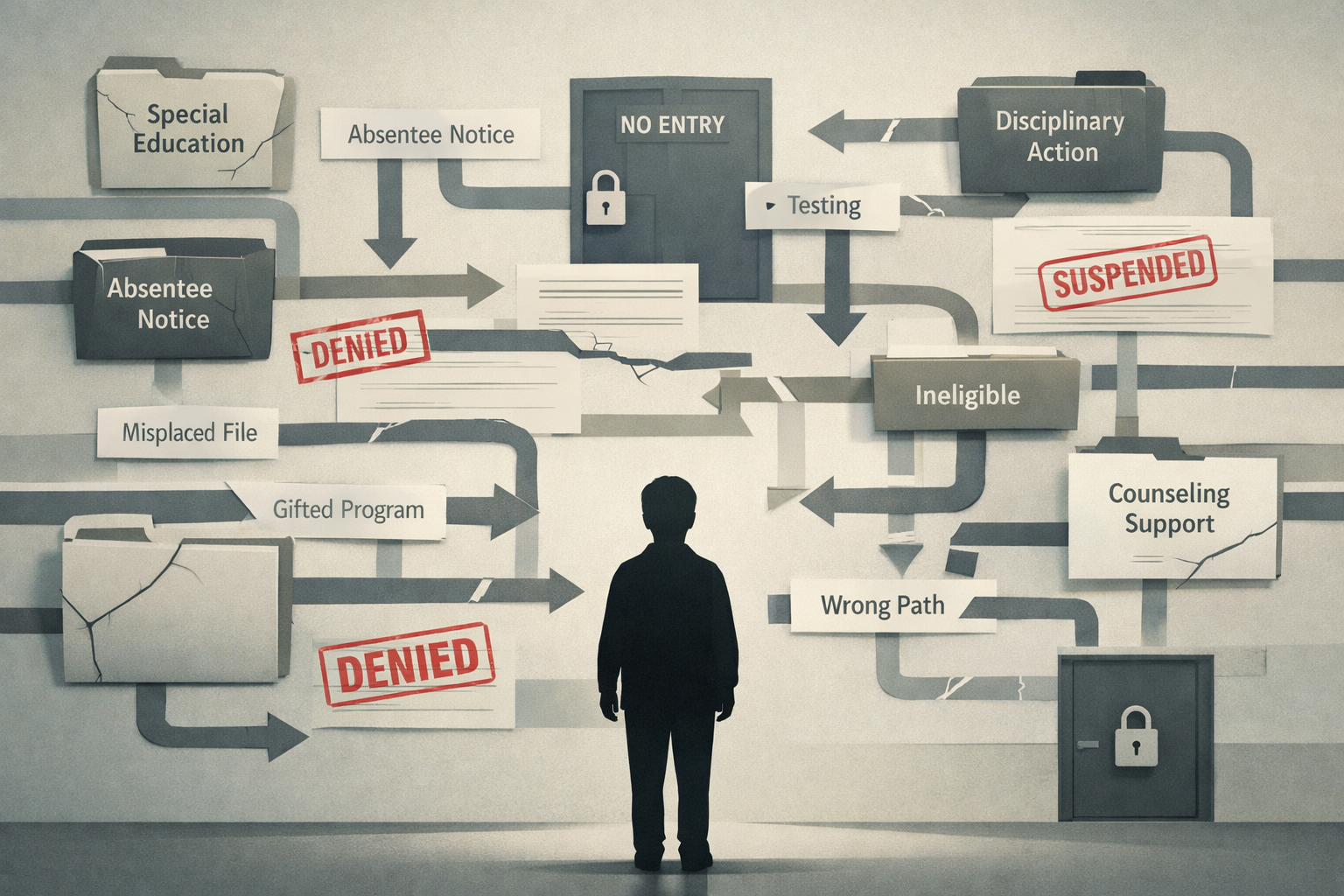
How structural bias, misidentification, and exclusionary discipline quietly shape unequal educational outcomes
Educational harm rarely begins with one dramatic event. More often, it emerges through mislabeling, biased assumptions, disciplinary exclusion, and systems that fail to recognize the full complexity of student need. This piece examines how those patterns are built into educational structures—and why real change requires redesigning the system, not just reacting to its consequences.